Casey Griffin · 4 October 2026
Shifting Trade Policies Fuel Niche Export Expansion for Highland Custom Forgers
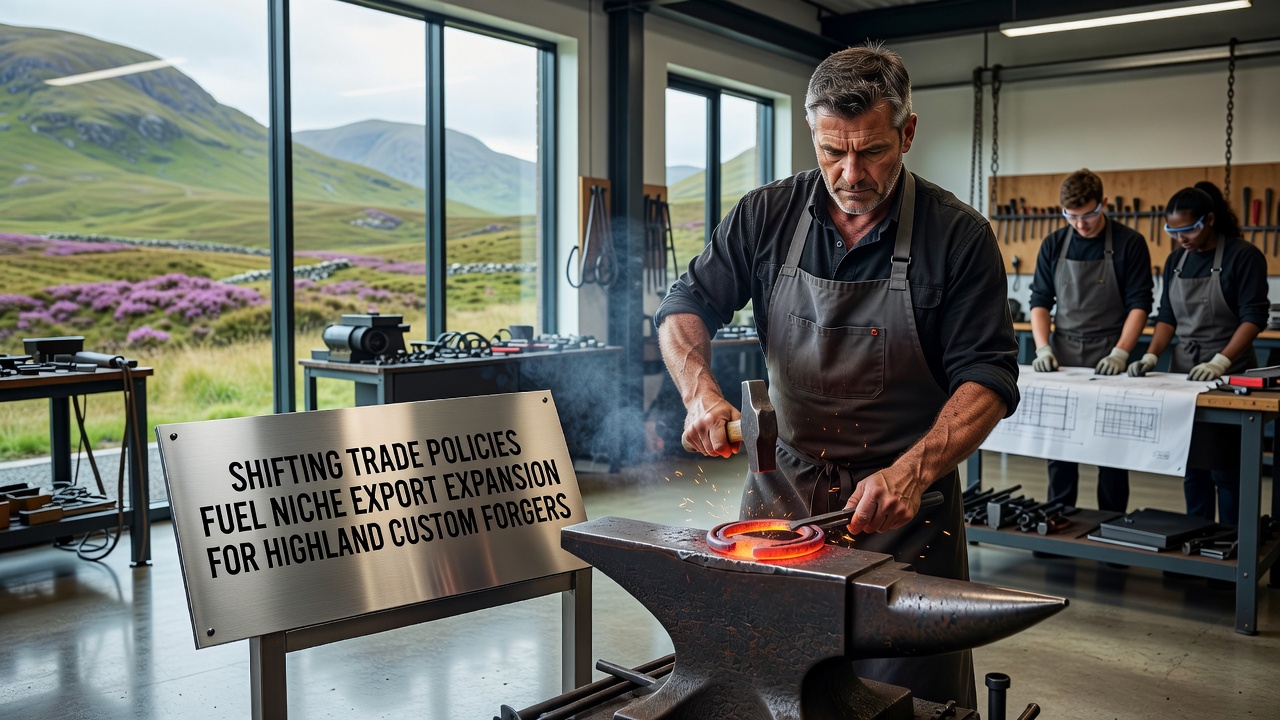
Highland custom forgers have seen their overseas shipments rise steadily since several bilateral trade agreements took effect in early 2025, and data collected through October 2026 shows continued momentum in niche metal goods heading to markets in North America and parts of Asia. These small-scale operations, concentrated in the Scottish Highlands, produce specialized items such as hand-forged tools, architectural hardware, and restoration components that larger industrial suppliers rarely handle. Recent policy adjustments have reduced certain tariff barriers and simplified customs documentation, which in turn has allowed these forgers to compete more effectively on price and delivery timelines.
Policy Changes Reshaping Export Routes
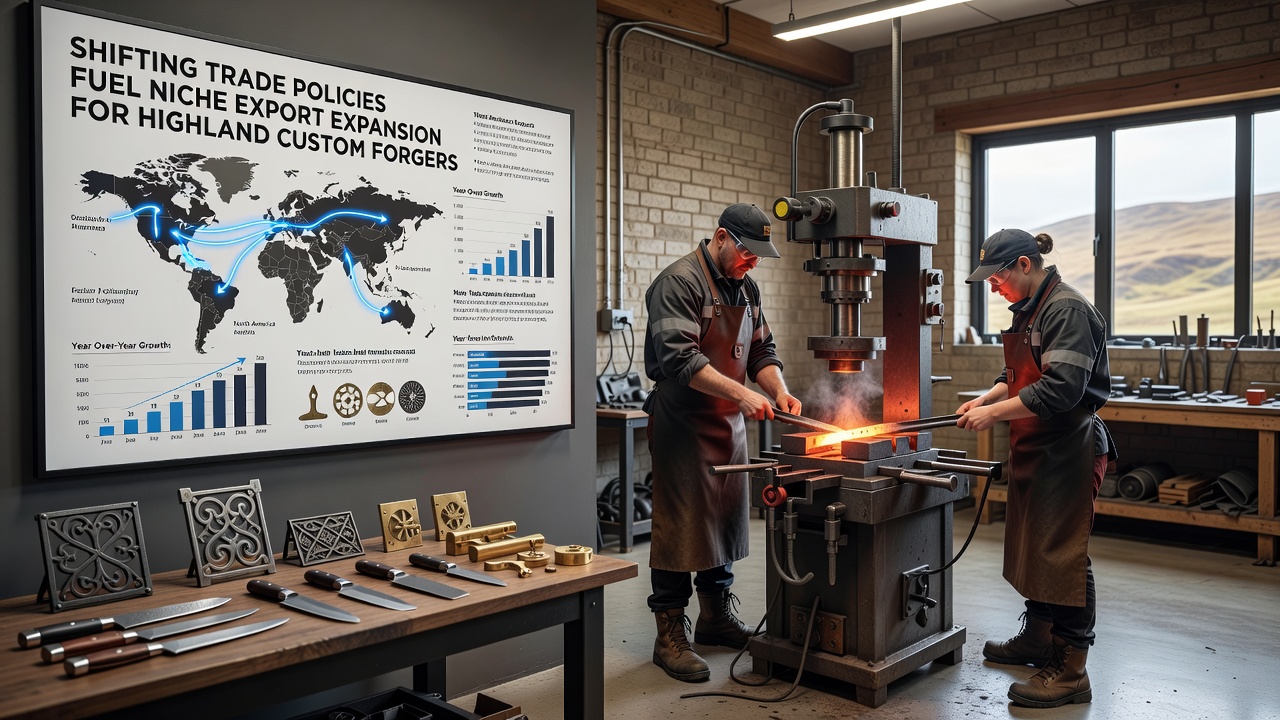
Adjustments to the UK-Canada enhanced trade framework and parallel updates in the UK-Australia agreement lowered duties on select forged metal products beginning mid-2025. Government records indicate that customs processing times for qualifying shipments dropped by an average of 18 days compared with 2024 figures, according to figures released by the Department for Business and Trade. For Highland workshops that operate with limited staff and seasonal production cycles, those time savings translate directly into the ability to meet tighter client deadlines abroad. Observers note that the combination of lower tariffs and faster clearance has encouraged several forges to expand their order books for the first time in five years.
Product Lines Driving the Growth
Custom anvils, farrier tools, and heritage-grade hinges represent the core of the expanding export mix. One workshop near Inverness reported shipping 47 units of a limited-run farrier anvil series to Canadian buyers in the first nine months of 2026, compared with 12 units in the same period of 2024. Similar patterns appear in data from smaller operations around Fort William and Dingwall, where architectural hardware orders for restoration projects in Australia increased 34 percent year-over-year. These products often carry specific material certifications and hand-finishing details that mass manufacturers cannot replicate at scale, giving Highland producers a distinct market position.
Logistics and Certification Adjustments
Many forges have updated their quality documentation to align with new mutual recognition protocols introduced under the revised agreements. This has involved adopting standardized testing procedures for steel composition and surface hardness that satisfy both UK and destination-country requirements. As a result, a single set of test certificates now covers shipments to multiple markets, reducing administrative overhead. Shipping partners report that consolidated freight options through Glasgow and Aberdeen ports have become more reliable, with dedicated slots for smaller consignments appearing on monthly schedules since late 2025.
Regional Economic Ripple Effects
Local supply chains supporting the forges have also registered increased activity. Steel stockists in the Highlands recorded higher volumes of specialized alloy orders, while independent heat-treatment providers extended operating hours to accommodate export deadlines. Employment data compiled by Highlands and Islands Enterprise shows that participating workshops added an average of 1.8 full-time equivalent positions per site between January and October 2026. Training programs focused on export compliance and digital order tracking have drawn participation from 27 workshops across the region during the same interval.
Market Feedback and Order Patterns
Buyers in target markets cite improved predictability in lead times and clearer pricing structures as key factors in repeat orders. A consortium of heritage preservation contractors in British Columbia placed a standing quarterly order for custom gate hardware beginning in March 2026, citing simplified import paperwork as the decisive element. In Australia, two architectural firms in Victoria expanded their sourcing to include Highland-forged window stays after attending a virtual trade showcase organized by the UK Department for International Trade. These examples illustrate how policy shifts have lowered entry barriers for niche suppliers that previously operated almost exclusively within domestic or European channels.
Conclusion
Trade policy developments since 2025 have opened measurable export pathways for Highland custom forgers, with October 2026 data confirming sustained growth in both shipment volumes and participating workshops. Continued alignment of certification standards and logistics improvements appear likely to support further expansion, provided raw material costs and energy prices remain within manageable ranges. The pattern demonstrates how targeted reductions in trade friction can benefit geographically concentrated producers of specialized goods.