Erik Koch · 1 November 2026
Scottish Highland Forges Manage Growing Demand Amid Safety Updates and Emission Research
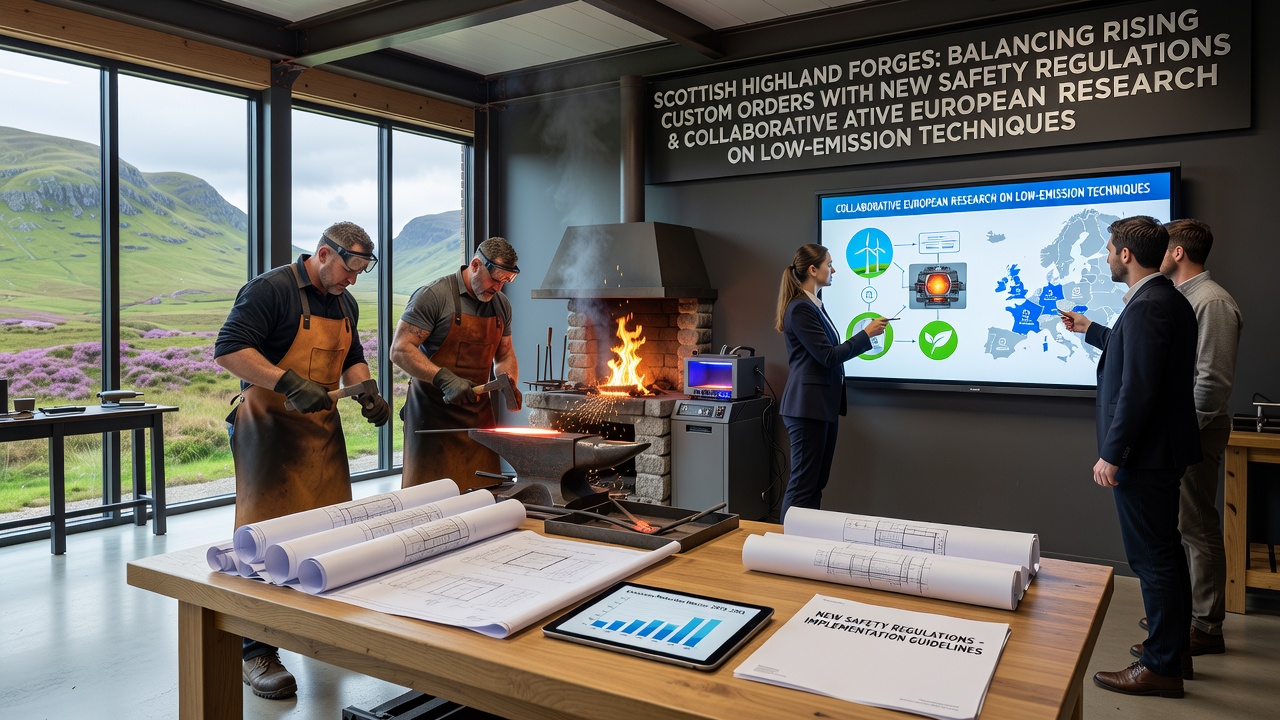
Scottish Highland forges have reported steady increases in custom orders throughout 2025 and into 2026, driven by demand for heritage-style tools, architectural ironwork, and specialized agricultural equipment, while operators simultaneously implement updated safety standards and participate in joint European projects focused on lower-emission production methods.
Rising Custom Orders Shape Daily Operations
Industry figures from the Scottish Forge Association show custom commissions rose by 18 percent between 2024 and 2025, with many workshops in regions such as Inverness-shire and Ross-shire receiving requests for one-off pieces that require extended hand-finishing and material tracing. These orders often involve clients from tourism operators, estate managers, and restoration firms who seek traditionally forged components that match historic specifications. Workshops have extended shift patterns and invested in additional apprenticeships to meet deadlines, yet production planners note that each new commission adds layers of documentation required under forthcoming safety rules.
New Safety Regulations Take Effect
Updated Health and Safety Executive guidelines for high-temperature metalworking, scheduled for full enforcement in November 2026, introduce stricter requirements for ventilation monitoring, personal protective equipment certification, and equipment inspection intervals. Forges across the Highlands have begun retrofitting extraction systems and logging daily exposure measurements, with several sites completing third-party audits in early 2026. Training programs coordinated through regional colleges now include modules on hazard recognition specific to forging environments, and records indicate that compliance documentation has become a standard part of order intake procedures.
Collaborative European Research on Low-Emission Techniques
Highland workshops joined a multi-country initiative coordinated by the European Commission that examines alternative heating sources and flux compositions aimed at reducing carbon output during forging cycles. Data collected from participating sites in Scotland, Norway, and northern France indicate that induction-assisted pre-heating combined with revised charcoal blends can lower fuel consumption by measurable margins. Researchers at partner institutions track particulate levels and energy use across seasonal production runs, sharing results through quarterly reports that inform equipment upgrades at individual forges.
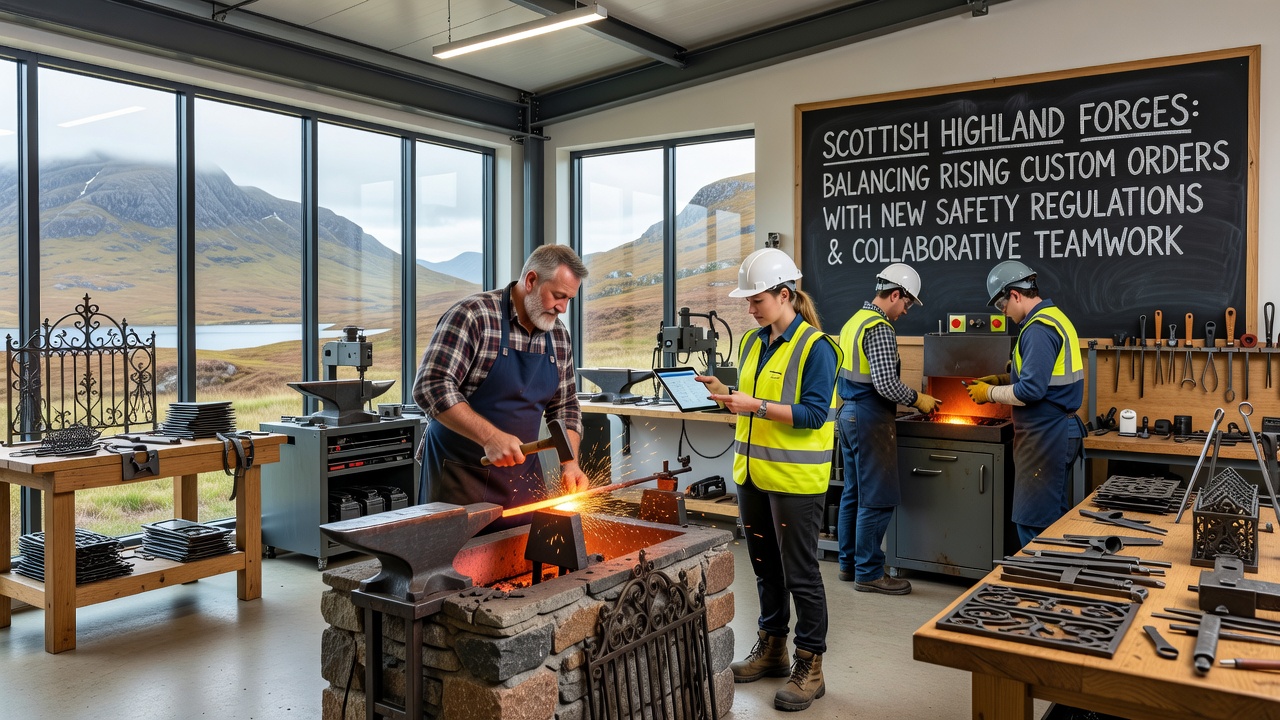
One participating forge near Fort William installed sensor arrays that feed real-time temperature and emission data into a shared database, allowing project partners to compare performance across different furnace designs. The same site reported completing a batch of gate hinges and restoration brackets using the revised heating protocol while maintaining output volume. Observers note that the integration of these techniques occurs alongside the safety upgrades, requiring coordinated scheduling so that new monitoring equipment serves both regulatory compliance and research logging.
Operational Adjustments Across Workshops
Workshop managers describe sequencing daily tasks so that high-heat operations coincide with periods of optimal ventilation, thereby aligning safety protocols with the emission-testing schedule. Supply chains have adapted as well; several Highland forges now source certified low-sulfur charcoal batches through a collective purchasing arrangement established under the European project. Records kept since January 2026 show that material traceability documentation accompanies every custom order from initial consultation through final delivery.
Training and Knowledge Exchange
Apprenticeship schemes run in partnership with local further-education providers incorporate both the new safety modules and the low-emission methodology developed through the collaborative research. Sessions held in October 2026 at a facility near Aviemore allowed participants from multiple Highland sites to practice equipment calibration on shared demonstration forges. Instructors report that hands-on exercises cover everything from gas monitoring to flux application adjustments that support reduced emissions.
Conclusion
Highland forges continue to process custom commissions while embedding the November 2026 safety requirements and contributing data to the ongoing European low-emission study. Coordination between regulatory compliance, research participation, and production scheduling remains central to maintaining output levels across the region.